
Sarcasm, a generous dose of self-irony and a pinch of cynicism: Austrian humour is known all over the world for good reasons. This is especially true of the capital, where locals have made a career out of grumbling, moaning and complaining – all in good spirit and with a twinkle in the eye, of course. Here’s where it all comes from and what makes the unmistakable Viennese Schmäh (tip for the right pronunciation: it rhymes with “meh”) so special!
First things first: What is Schmäh exactly?
Austrian humour, and Viennese Schmäh in particular, is not just a quick joke on the side, but more of an attitude to life. Typically, it pairs pretend-“Grant”, that distinctly Austrian brand of grumpiness, with charming wordplay, a healthy dose of self-irony and quick-witted remarks. It’s subtle, playful and seldom straightforward: a remark can sound perfectly friendly and still have a sharp edge, as well as the other way round. And precisely this play on nuances is what makes this very specific brand of humour so appealing. So if you want to understand Viennese Schmäh, you’ll definitely need to read between the lines! Here are some of the main characteristics:
- (Self-)irony and understatement: People often say the very opposite of what they mean. Laughing at yourself is as much part and parcel of the game as dry “na wunderbar” (“oh, wonderful”) when things are anything but.
- Grumbling and moaning: Known as “Grant” and “Raunzen”, this well-cultivated manner of complaining is more a stylistic device than a genuine expression of a bad mood. So if the waiter greets you with a certain brusqueness on your next visit to a Viennese coffee house, don’t take it personally. It’s not rude, just “typically Viennese”.
- Black humour: Not even death is off limits, and it regularly finds its way into a joke or two. A lavish funeral in Vienna, for instance, is affectionately called “a schöne Leich”, literally “a beautiful corpse”.
- Puns and wordplay, usually in dialect; which can make it a challenge for newcomers to follow the joke.
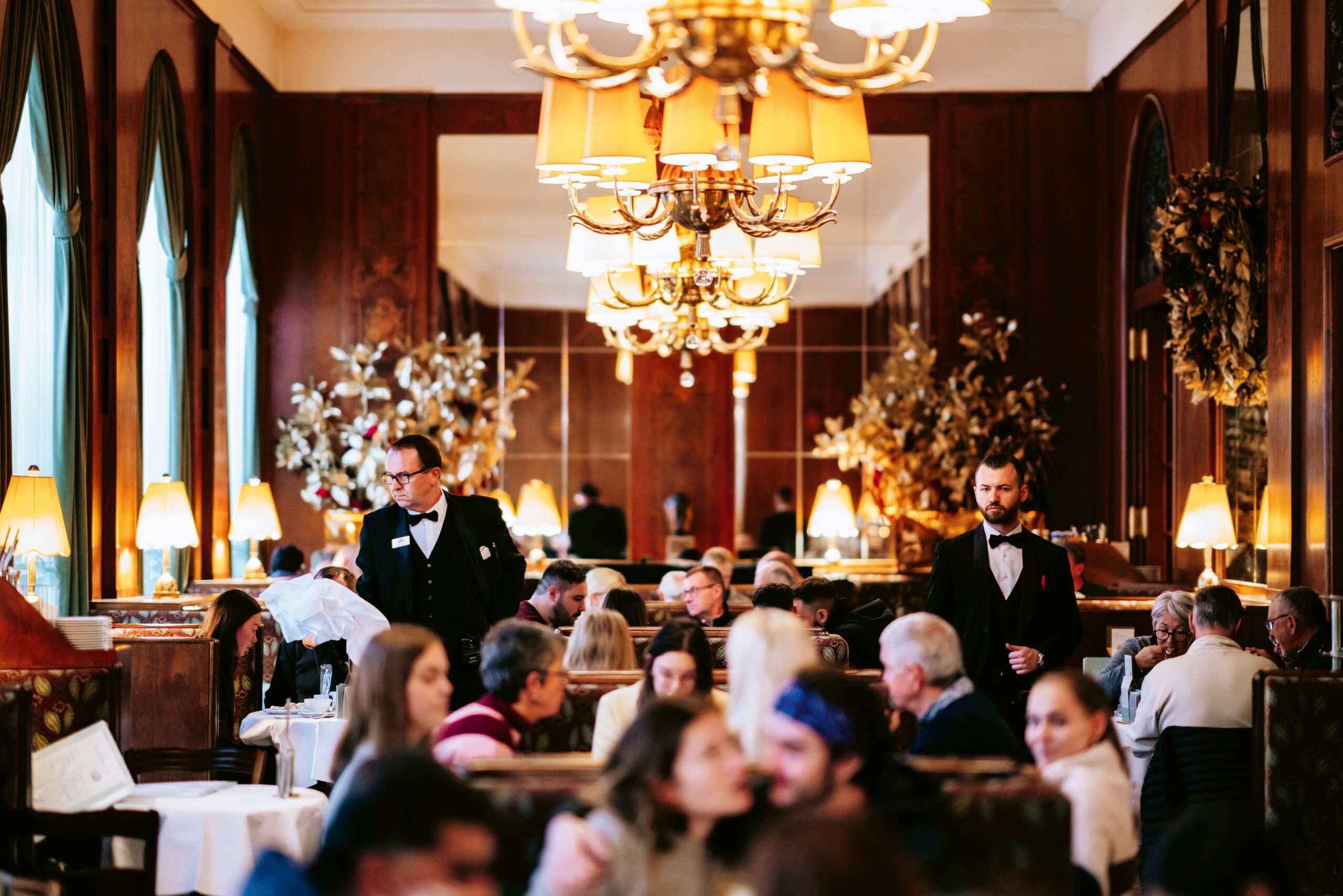
Another facet of Austrian humour is known as “Schmäh führen”, the Viennese answer to British banter, which incorporates all of the above characteristics. Usually, it follows a clearly defined pattern: one person makes a cheeky remark, the other fires back a quick-witted reply, culminating in a lively back-and-forth. Which, to the untrained ear, may easily sound like a full-blown confrontation. For those involved, though, it’s quite the opposite: if someone bothers to engage in banter with another person, it’s usually a sign of friendly affection.
So if you’re still getting used to the quirks of Austrian dialect, and Viennese in particular, here’s a golden rule: don’t take everything at face value. What may sound almost insulting or dismissive at first is often very much tongue-in-cheek. The best way to handle a grumpy remark? Join in! A quick-witted reply will win you far more goodwill than a puzzled look. And if you’re all out of snappy comebacks, one of these typical Viennese expressions will always do the trick.
Schmäh for beginners: How to speak like a local
- “Na geh!”: Depending on the tone, this can mean “Oh, come on!”, “You don’t say!” or “Seriously?”
- “Na servas!”: An all-purpose exclamation of surprise, annoyance or dismay, much like a heartfelt “Blimey!”
- “Schau ma moi, dann seg ma scho.”: “Let’s wait and see.” The unofficial Viennese motto for just about any situation.
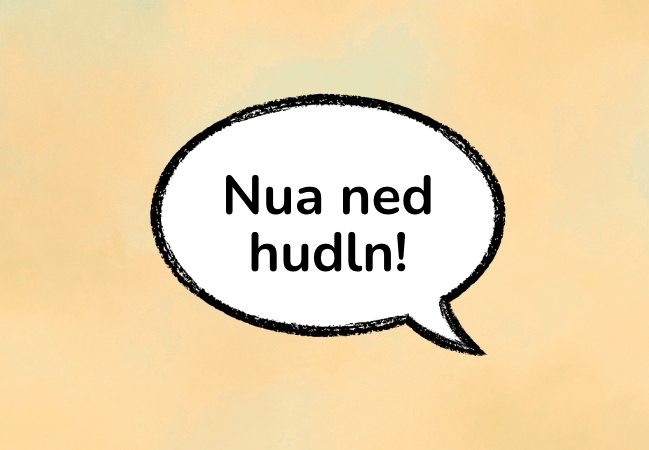
- “Nua ned hudeln!”: “No need to rush.” A gentle reminder that in Vienna, things are best taken at a leisurely pace.
- “Des is ma Powidl.”: “I couldn’t care less.” Literally: “That’s plum jam to me.”
Did you know? The word “Schmäh” actually has several meanings in Austrian German. Originally, it referred to a trick, a sleight of hand or a fib. So if someone says “Des is a Schmäh”, they mean: “That’s not true.” “Ohne Schmäh”, on the other hand, simply means “honestly” or “no kidding”. And “Schmäh führen”, as we’ve seen, means keeping others entertained with jokes and banter.
From Nestroy to comedy: The art of Schmäh
As early as the 19th century, playwright Johann Nestroy used to cloak his criticism of the authorities in clever wordplay and double entendres to get past the censors. His audiences, of course, knew exactly what he meant. That may not be where Viennese Schmäh began, but it shows how deeply the art of the hidden punchline is woven into the Austrian soul. To this day, you’ll find it in the thriving comedy scene as well as in countless Austrian films and TV series, where this very particular humour plays a starring role: whether playful, grumpy, melancholic or downright morbid.
As early as the 19th century, playwright Johann Nestroy used to cloak his criticism of the authorities in clever wordplay and double entendres to get past the censors. His audiences, of course, knew exactly what he meant. That may not be where Viennese Schmäh began, but it shows how deeply the art of the hidden punchline is woven into the Austrian soul. To this day, you’ll find it in the thriving comedy scene as well as in countless Austrian films and TV series, where this very particular humour plays a starring role: whether playful, grumpy, melancholic or downright morbid.
All jokes aside: you’ll find plenty more fascinating facts about Austria and its customs and traditions on our blog. Discover more about Austrian cuisine and typical Austrian drinks, find out what the Viennese ball season is all about and why dirndl dresses and lederhosen are still very much part of Austrian culture today. Small as the country may be, there’s plenty to discover!