
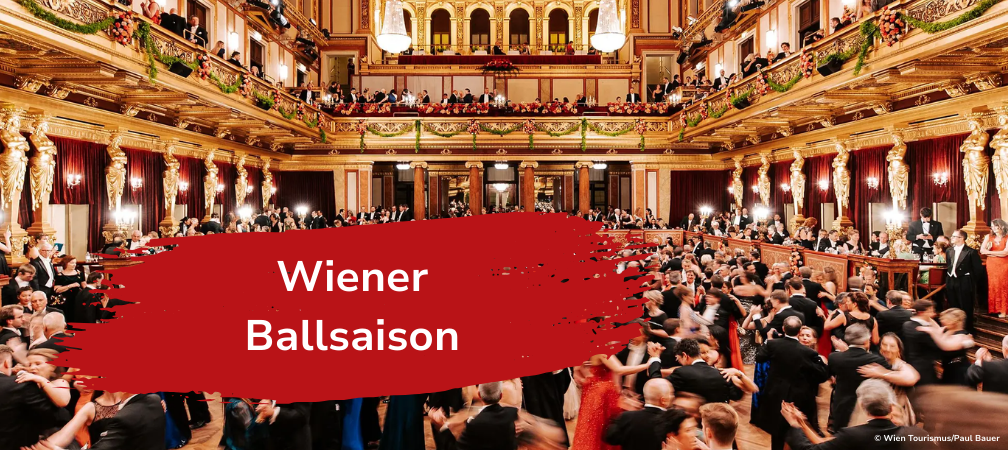
Opulent robes, artfully decorated ballrooms and the joyous sounds of the waltz echoing through the rooms: No other event compares to the glitz, glamour and elegance of Vienna’s many balls. With around 450 taking place throughout the season, it’s no surprise Austria’s capital is commonly referred to as the world capital of the Waltz. Read on to find out what makes Viennese ball culture so special, what a typical evening looks like, and which events need to be on your radar.
When does the ball season in Vienna start?
Officially, the ball season starts on November 11 at 11:11 with the beginning of the Austrian carnival. This is traditionally celebrated with a public Waltz and Quadrille on Graben in the city center. January and February are the pinnacle of the ball season, featuring the biggest and most glamorous society balls which consistently attract thousands of visitors from all over the world. The season culminates on Shrove Tuesday. A schedule that is anything but random – in fact, it’s a tradition that has been around for centuries.
A historic tradition: Where did Viennese ball culture originate?
The beginnings of the Viennese ball culture can be traced back as far as to the 17th century, where it was customary for the imperial Court to hold lavish celebrations. The first surge in popularity of the traditional ball came during the Viennese Congress 1814/15, when Europe’s power elite gathered in the capital to not only discuss political matters, but also dance the night away. To this day, the famous dictum “The Congress is dancing” is synonymous with those days.
While balls and dances used to be reserved for the aristocratic elite, they gradually became more and more accessible to the middle classes during the 19th century: professional associations, guilds and clubs all started to organise and host their own balls, laying the foundations for a tradition that still lives on. Some of the most famous traditional balls include the Confectioners’ Ball (“Zuckerbäckerball”), Vienna Coffeehouse Owners’ Ball (“ Kaffeesiederball”), which still are amongst the most important balls of the season.
The dress code: What to wear for a Viennese ball?
A ball is the perfect opportunity to experience that fairytale feeling first-hand – as such, the dress code takes on a vital role in setting the right atmosphere. Every ball tends to have its own specific dress code, which is usually detailed on the official invite or the ball’s website. So before you go anywhere, make sure to check this, as the prescribed dress code is strictly enforced by the organizers – who will bar you from entering the venue if you don’t look the part.
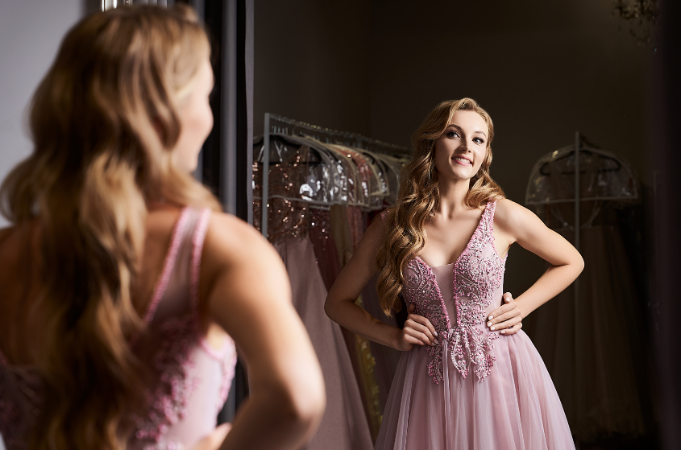
Usually, ladies are required to wear a floor-length gown or a big robe – party dresses or cocktail dresses are a no-no, and only the tip of your shoes should be visible. Also, stay clear of white dresses, as these are exclusively reserved for the debutantes. A regular suit and tie are equally banned: Instead, gentlemen are required to wear a tuxedo or tailcoat, either with a white bow (tailcoat) or black bow (tuxedo).
The event: What does a typical ball look like?
While the dancing may be the heart and soul of any ball, guests can expect a lot more than just waltzing and Polka dancing – including side events, midnight shows and special acts. Here is an overview of what you’ll typically see at a ball:
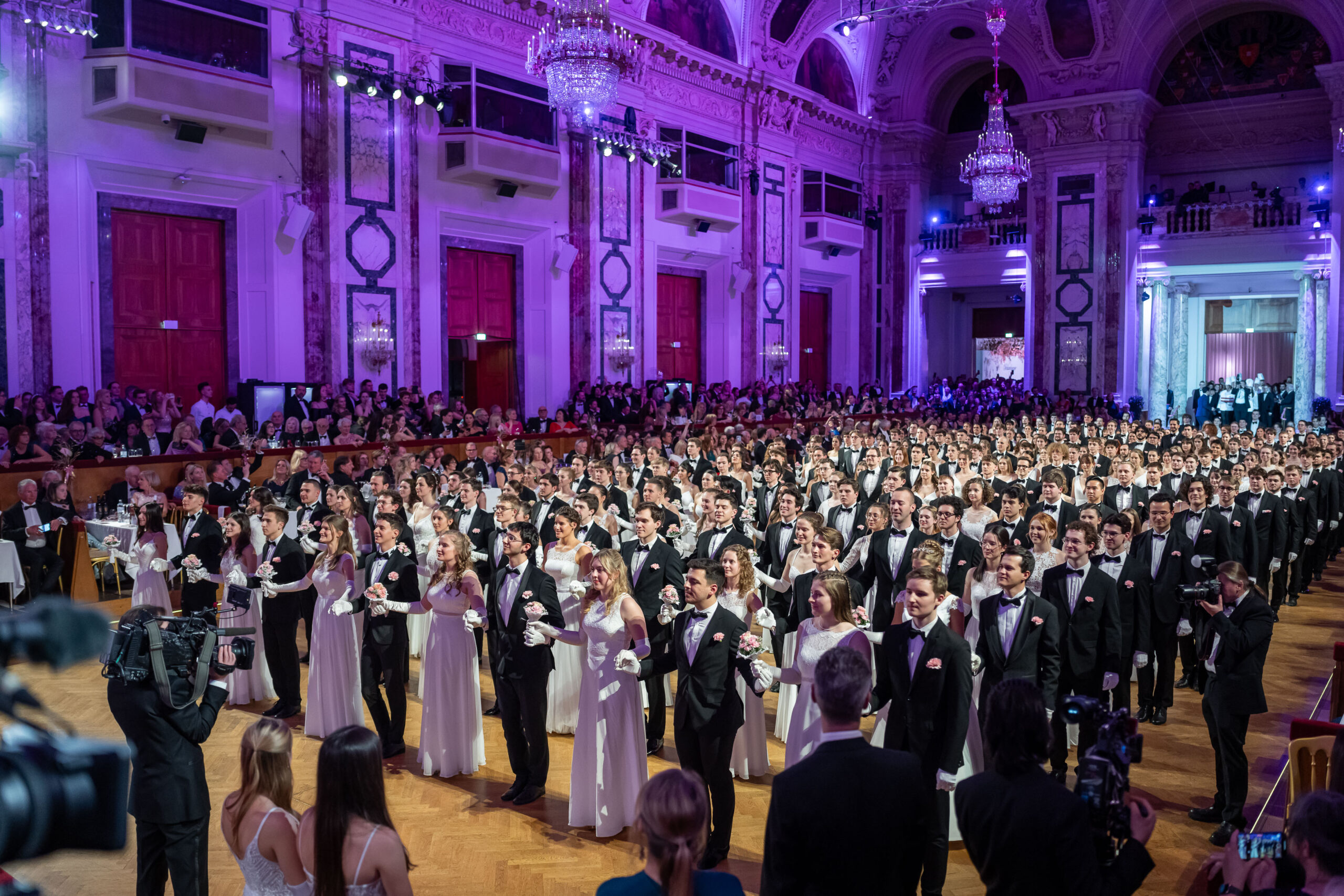
- Opening ceremony: This is usually the most festive event at every ball. The debutantes, dressed in white, and their tailcoat-clad partners enter the ballroom to open the night with the first Waltz. Once the famous words “Alles Walzer!” ring out, all other guests can officially take to the dancefloor.
- Music and dance: Whether traditional orchestras, dance bands or contemporary DJs, you’ll find a variety of music styles at a Viennese ball. Besides the main room with classic ballroom and Latin dances, designated areas with pop, rock and other contemporary music as well as lounges with club-vibes are common. Plus, some balls exclusively feature modern music, like the Techno Ball or Hip-Hop Ball.
- Midnight Quadrille: It’s the highlight of any ball, and an event not to be missed. A dancing master leads through the steps, telling people exactly what they need to do: whether forming rows, turning, switching partners or bowing. While it does sound like strict choreography, it’s usually a merry, vaguely organised chaos of animated dancing and moving around – and tons of fun!
Besides the dancing, many balls feature various fringe events to keep their guests entertained throughout the night, including shows, tombolas, performances by guest stars or photo booths.
| Did you know? You don’t actually need to be a professional dancer to get the most out of your experience. Enjoying the festive atmosphere, wandering through the lavish ballrooms and admiring the glamorous attire of other guests is as much part of a typical ball as a quick waltz across the dancefloor. |
The most famous Viennese balls
Vienna Opera Ball
The Viennese Opera Ball is without doubt the most famous and glamorous ball of the season, with the rich and famous from all over the world gathering at the Vienna State Opera for a night of lavish festivities. The opening ceremony is also broadcast live on Austrian television – and an event not to be missed for many, even if they’re unable to attend in person. As such, tickets are scarce and highly sought-after.
Tip: If you’d still like to get a taste of what the Opera Ball is all about (without the hefty price tag), attending the dress rehearsal the evening before is a great alternative. This gives you the chance to view the festively decorated venue up close, and to take a look behind the scenes of the opening ceremony.
Ball of the Vienna Philharmonic
It’s the musical pinnacle of the ball season: The world famous orchestra itself takes center stage for the opening ceremony at its home venue, the historic Musikverein in the heart of Vienna.
Confectioners’ Ball (“Zuckerbäckerball”)
Vienna’s “sweetest” ball is organised by the confectioners’ guild, and takes place at the Hofburg. It’s particularly famous for its many fringe events and performances, including a show bakery, ballet dancing and delightfully sweet treats aplenty.
Vienna Coffee House Owners’ Ball (“Wiener Kaffeesiederball”)
Year after year, Vienna’s coffee house owners invite the public to lavishly celebrate Vienna’s rich coffee tradition at the Hofburg. Throughout the night, many coffee houses in the inner city of Vienna keep their doors open to serve hungry attendees with a traditional post-ball breakfast.
Hunters’ Ball (“Jägerball”)
The order of the evening? Dirndl and traditional costume instead of the classic evening gown and smoking. While the Hunters’ Ball may be slightly unorthodox as far as the dress code goes, it’s a firm fixture amongst Austria’s political elite. Taking place at the Hofburg and the Spanish Riding School, it also serves a good cause: All proceeds from the event go towards supporting hunting, forestry and conservation of nature.
Elmayer Kränzchen (“Elmayer party”)
The so-called Elmayer Kränzchen, initiated and organized by Vienna’s most famous and traditional dancing school “Elmayer”, is special in many ways. Taking place on Shrove Tuesday, the official end of the ball and carnival season, the festivities start in the early evening and finish at midnight.
Rudolfina Redoute
A ball with a touch of mystery: Until the clock strikes twelve, ladies are required to wear elegant eye masks. They also have the exclusive right to ask a gentleman of their choice to dance, which makes for a temporary break from convention.
Flower Ball
Held at Vienna’s Town Hall, the Flower Ball boasts opulent floral arrangements and decorations, and is also amongst the more affordable. So if you’re looking for a budget-friendly option to immerse yourself in true Viennese ball culture, it’s an event you don’t want to miss.
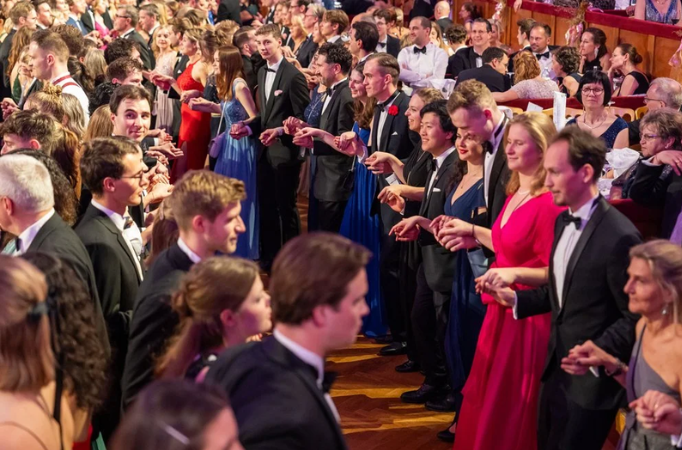
Midnight Quadrille ZuckerBäckerball © Ripix
Tickets and prices: How much does it cost?
You don’t actually need to win the lottery to be able to attend a ball: Ticket prices are usually a lot more affordable than one would think, and entirely depend on the event. A simple, entry-only ticket on average costs between 80 and 220 Euros, although some events are on both the cheaper and more expensive end of the spectrum. The Vienna Opera Ball, for example, will cost significantly more, whereas smaller, less established balls usually are a lot cheaper. Additionally, many events offer special discounts for students and young adults – perfect for experiencing the fairytale feeling while on a budget.
Good to know: The ticket price itself usually only covers the entry fee. If you’d like a table or a box, you’ll have to book and pay for these separately. Food and drink are also not included, and in some cases you may even have to pay extra if you want to attend the opening ceremony. However, whatever budget you’re on: With over hundreds of balls to choose from, you’re sure to experience an unforgettable night of quintessential Viennese flair.
Whether lavish balls or culinary delights, there are plenty more fascinating Austrian customs and traditions to discover on our blog: Explore our lowdown of the best music festivals in Austria, find out more about some of the country’s most famous classical composers or dive right into the tasty side of things – from traditional dishes to handy tips for your next Heurigen visit.