
So you’ve decided to study in Austria. With over 70 higher education institutions across the country, there’s plenty to choose from, and plenty to consider: what kind of institution do you want to go to, which city do you want to live in, and what exactly are the requirements to get in? Let’s take a closer look.
What types of universities are there in Austria?
In Austria, the umbrella term “Hochschule” (institution of higher education) covers three different types of institution, varying by academic focus, range of subjects available, and way of studying. Which one is the right fit depends not only on the subject you want to study, but also on how practice-oriented, research-driven or creative you’d like your studies to be.
Traditional Universities
Combining research and learning, universities are the oldest and most traditional type of higher education institution in Austria. They typically cover a broad range of subjects, including anything from Arts and Science to Medicine, Law, Business and Theology.
In addition, there are also dedicated Arts and Music universities for highly specialised artistic training in fields such as Fine Art, Design, Music, Drama and Dance. The basis for admission almost always involves an entrance exam, in which applicants have to prove their artistic skills.
And naturally, you’ll also find a number of private universities in Austria. These often offer very specialised degree programmes in areas such as Medicine, Business, Art or Music which are not commonly available at public universities.
Universities of applied sciences
Despite sharing similar names in English, universities of applied sciences (“Fachhochschulen”) are very different. Unlike the more research-focused classic universities, the emphasis is on hands-on training, with clearly structured degree programmes, fixed timetables and often compulsory work placements that aim to prepare students for their first job.
Teacher’s College
Aspiring teachers study at a Teacher’s College (“Pädagogische Hochschule”). Alongside subject knowledge, these institutions place particular emphasis on teaching skills and classroom practice.

What kind of degrees can you get in Austria?
As in most European countries, higher education in Austria follows the three-cycle Bologna system, which means that the following three degrees are broadly comparable to most other countries’ degrees:
- Bachelor’s degree: The foundation of your academic journey. Usually lasting three years, it provides broad knowledge of a specific subject and qualifies graduates for their first job – or for a Master’s programme, should they wish to continue their studies.
- Master’s degree: A Master’s typically lasts two years and builds on a Bachelor’s degree. It’s the route for anyone looking to specialise in a particular field or move into more senior positions.
- Doctorate: The highest academic degree. It involves three to four years of research, concluding with a dissertation – which is subsequently defended publicly in an oral examination known as “Defensio”.
Good to know: The three-cycle Bologna system with Bachelor’s, Master’s and doctoral degrees was only introduced in Austria in the 2000s. Before then, students completed an eight- to ten-year “Diplomstudium” culminating in a Magister degree. Additionally, the “Bakkalaureus” was Austria’s version of the Bachelor’s, before being replaced by the international term.
The old system hasn’t disappeared entirely, though. Some subjects, including Law, Catholic Theology and Veterinary Medicine, have kept the “Diplomstudium” and the “Magister” title to this day. And anyone who received their title under the old system gets to keep it, of course: a Mag. or Dipl.-Ing. is still fully valid today and counts as equivalent to a Master’s.
What are the requirements for studying in Austria?
To study in Austria, you first need what’s known as the general university entrance qualification (“allgemeine Universitätsreife”). For most, that means sitting the Matura, the final exam of the Austrian school system, which qualifies you for any subject at any type of institution. Two alternative exams are open to those without a Matura: the “Berufsreifeprüfung” (vocational matriculation examination), for those who have completed an apprenticeship or professional training, and the “Studienberechtigungsprüfung” (special university entrance qualification), which qualifies you for one specific field of study.
Subjects with restricted admission have their own additional selection procedures. Some degree programmes also call for supplementary exams: For example, a Latin exam is required for Law or History (the “Latinum”), a Biology exam for Medicine, and a Descriptive Geometry exam for Architecture. These can, however, also be taken during the actual course.
Universities of applied sciences often accept applicants without a Matura, provided they have proof of a relevant professional qualification, and run individual selection procedures. Teacher’s Colleges require an aptitude assessment in addition to the entrance qualification, while private universities often have even stricter application processes involving detailed application documents and interviews.
Can international students study in Austria?
If you didn’t attend an Austrian school, your country’s equivalent of the Matura will generally be recognised, provided it’s broadly comparable. And if German isn’t your first language, you’ll also need to provide proof of your language skills at B2 or C1 level, either through the ÖSD exam or an equivalent certificate.

Which are Austria’s best university cities?
“Studying in Austria” can mean something quite different depending on which of the seven major university cities you end up in. Choosing a place to live also means choosing a unique student culture and atmosphere. Let’s take a look at what each city has to offer.
Vienna
No other Austrian city attracts as many students as the capital. More than 200,000 are enrolled at some of the country’s oldest and most prestigious institutions. The University of Vienna covers a broad range of subjects, while the Vienna University of Technology (TU), the Vienna University of Economics and Business (WU) and the University of Natural Resources and Life Sciences (BOKU) each bring their own specialisation. Together, they make up the widest choice of degree programmes in the country.
Graz
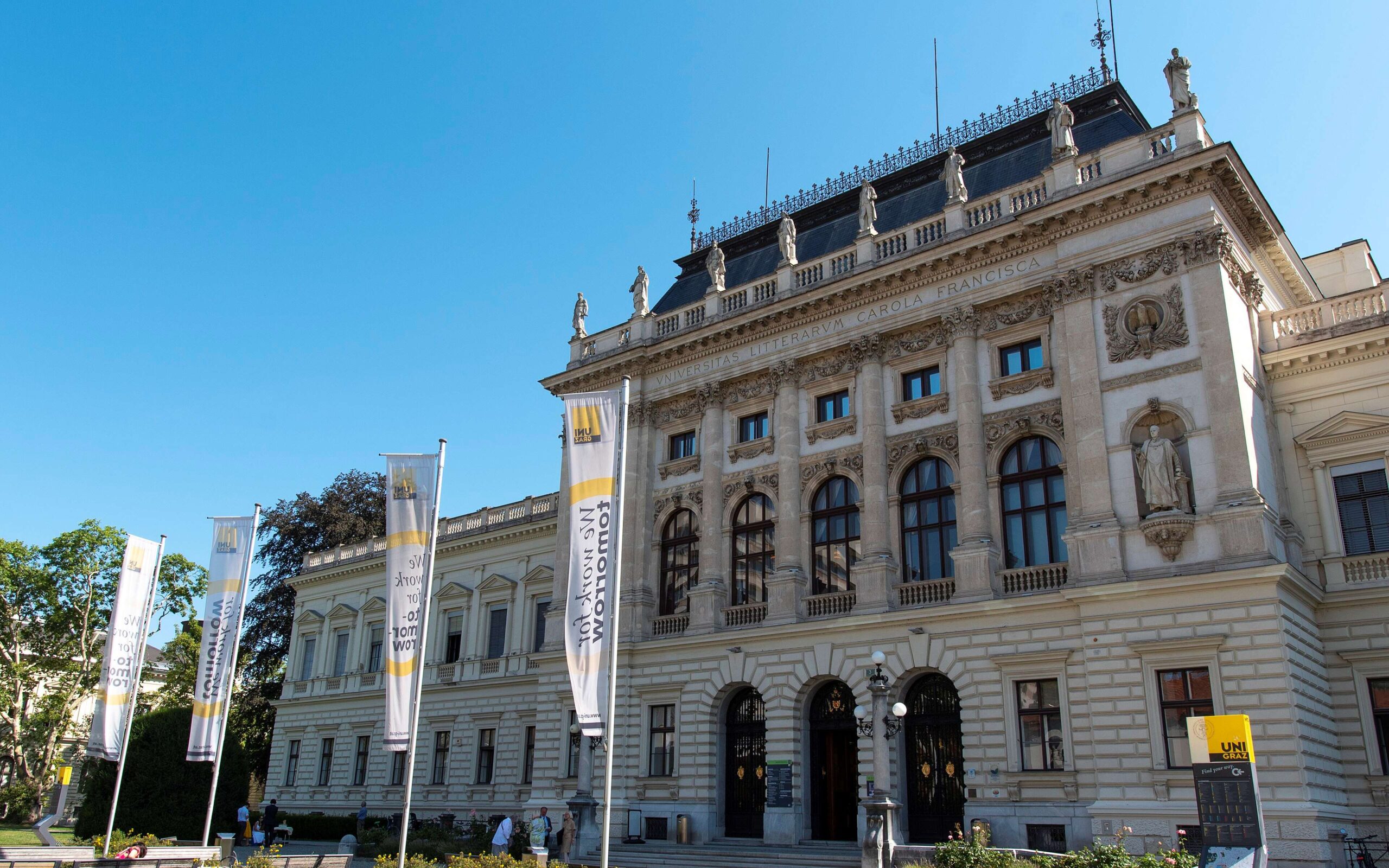
With more students per capita than anywhere else in the country, Graz has earned the nickname of Austria’s unofficial student capital. The long-established University of Graz, numerous universities of applied sciences and specialist institutions for Technology, Medicine and the Arts offer plenty of choice. And with everything set in a compact UNESCO-listed old town, you’re never more than a short walk away from a lecture hall, a coffee house or a cosy spot by the river Mur.
Innsbruck
In Innsbruck, your lecture hall comes with a mountain view. The Tyrolean capital combines a long-standing university tradition with a high number of international students and world-renowned research in Quantum Physics, Atmospheric Science and Alpine Studies. The surrounding mountains shape the day-to-day well beyond the lecture halls, too: skiing after a morning lecture, or heading out for a hike in summer, is pretty much the norm.
Salzburg
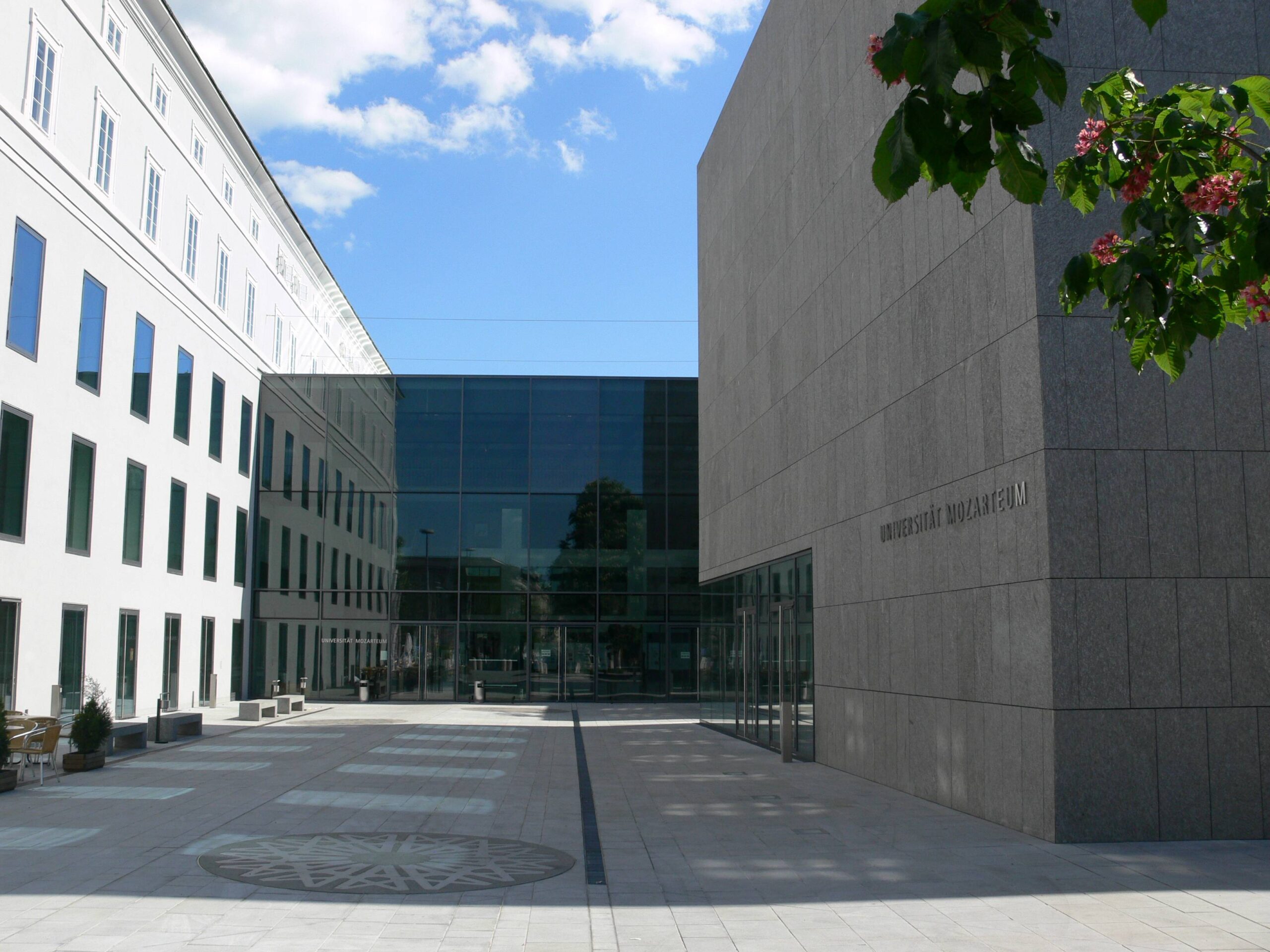
Rolling foothills, the towering peaks of the Northern Limestone Alps and the Hohensalzburg Fortress: this picturesque backdrop isn’t just the setting for The Sound of Music and the Salzburg Festival, one of Austria’s most important music festivals. More than 23,000 students are based here too, many of them studying at the internationally renowned Mozarteum or at the University of Salzburg, with a clear focus on Music, Art and the Humanities.
Linz
Over the past few decades, Linz has undergone a remarkable transformation, from a mainly industrial city to a hub for art, technology and digital culture. Little wonder, then, that it draws students of Engineering, Natural Sciences and Business in particular. The city is also home to the renowned University of Art and Design, bringing with it a lively art scene that, together with the city’s thriving club culture, keeps student life anything but dull.
Leoben
Leoben is Austria’s smallest university town, and home to a specialisation that is unique in the German-speaking world: for over 180 years, the “Montanuniversität” has devoted itself to teaching and research in Mining, Metallurgy and Materials Science. This has given rise to a student culture all of its own, complete with long-standing traditions such as the famous “Ledersprung”. Literally translating to “leather jump”, where students leap over a leather hide and thus are ceremonially welcomed into the community.
Klagenfurt
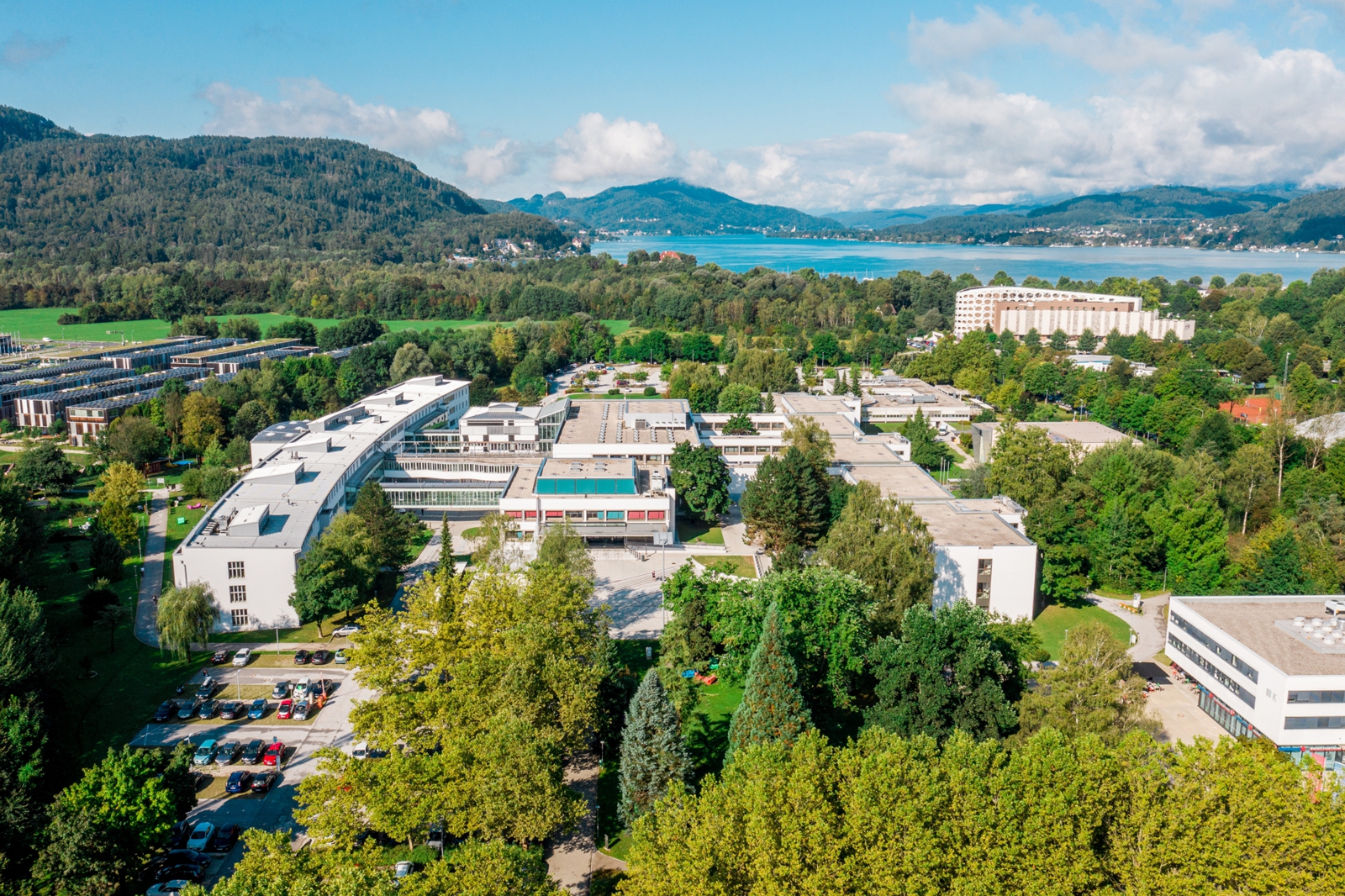
Studying by Lake Wörthersee, with views of the Karawanks and cultural influences from Slovenia and Italy just around the corner: Klagenfurt is an international university town with a remarkable range of options for its size. Between them, the University of Klagenfurt, the Carinthia University of Applied Sciences and the Gustav Mahler Private University for Music cover a broad spectrum of subjects.
Did you know? Austria is the land of bureaucracy and academic titles. It’s very common to find a Mag., Dr. or Dipl.-Ing. on someone’s letterbox or business card, and some academics will introduce themselves by their title the first time you meet them.
Want to know more about Austria’s quirks, culture and way of life? On our blog, you’ll find plenty more reading material on the Alpine republic: Find out which dialects are spoken in Austria, what makes our traditional dress so unique, or which customs and traditions shape the year. And if you’d like to explore the culinary side of Austria, we’ve got an overview of the best regional specialities as well as an introduction to Viennese coffee house culture and the Heurigen experience. Happy reading!