
Extravagant performances, plenty of drama and a ridiculous amount of sequins: Welcome to Europe’s most iconic, annual singing competition. Since the 1950s, the best acts from across the Eurovision member states have gone head-to-head to vie for the votes of both a professional jury and the general public, with performances ranging from operatic ballads to elaborate dance acts and everything in between. So why is the Song Contest such a firm fixture in the cultural calendar? And why, more than half a century after its inception, does it show absolutely no signs of losing in popularity? Let’s take a look.
How it all started: The origins of Eurovision
The Eurovision Song Contest – or ESC for short – made its debut in 1956 in Lugano, Switzerland, under the rather elaborate name “Grand Prix Eurovision de la Chanson Européenne“. The original idea, however, had little to do with launching pop careers: it was conceived as a way to foster cross-border collaboration between public broadcasters. Seven founding nations – Germany, France, Switzerland, Italy, Luxembourg, Belgium and the Netherlands – joined forces under the newly formed EBU (European Broadcasting Union) to stage the first edition, modelled on the prestigious San Remo Festival. Entries were performed in the French language, and each country was allowed to submit two songs. The first winner? The host nation Switzerland, with Lys Assia taking the trophy for her song “Refrain”.
Since then, the EBU has grown to an impressive 57 member states, even including Australia after a special ruling was implemented in 2015. Plus, in order to ensure a more unified branding globally, the name was soon changed to “Eurovision Song Contest”.
How does the Eurovision Song Contest work?
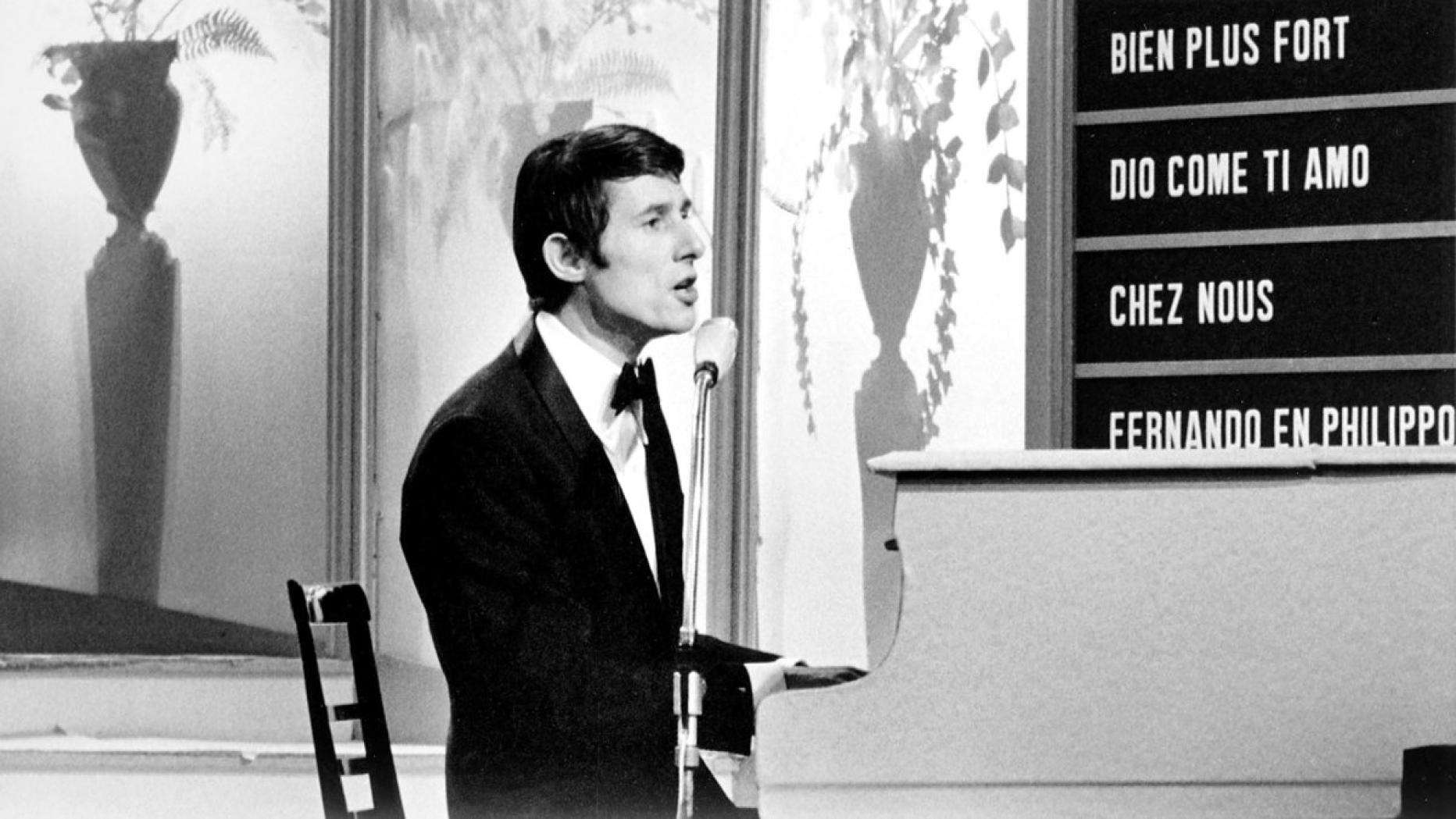
A lot has changed over the decades: entry requirements have been tweaked, qualification rounds introduced, and the voting system overhauled more than once. Nonetheless, the basic format has remained largely the same since the second contest in Frankfurt in 1957: one act per country takes to the stage, followed by a short interval act and the all-important scoring at the end.
Viewers from every participating country can cast their votes via phone, text or the official Eurovision app. All public votes are tallied to determine the top ten acts, then combined with the scores from the professional jury to crown the winner. Since 2004, broadcasters have been required to include televoting as a way of determining their country’s result.
Did you know? Frankfurt also gave rise to another beloved Eurovision tradition: the winning country’s broadcaster gets to host the following year’s contest. The only exceptions to this rule so far have been the contests of 1960, 1963, 1972, 1974 and 1980.
Qualifications & Semi-Finals
Not everyone has to fight their way through to the grand final. The so-called “Big Five” – Germany, France, Italy, the United Kingdom and Spain – are automatically guaranteed a spot, as the countries that contribute the most to the EBU’s coffers. Everyone else has had to qualify via one of two separate semi-finals since 2008, giving as many countries as possible a shot at the big stage. How each country selects their act is entirely up to them – many opt for elaborate national selection shows and public votes, while others make the call behind closed doors.
How often has Austria won the ESC?
Austria has claimed the top spot three times – joining the likes of Switzerland, Ukraine, Italy, Denmark and Norway in the three-wins club with these performances:
- 2025: JJ with “Wasted Love”
- 2014: Conchita Wurst with “Rise Like a Phoenix”
- 1966: Udo Jürgens with “Merci Chérie”
Despite the highs, Austria’s Eurovision record does have its low points, too. The country shares the dubious honour of receiving “nul points” on four separate occasions along with Norway and Switzerland. The first country ever to walk away pointless, however, was Belgium back in 1962, while Germany (1964, 1965) and the Netherlands (1962, 1963) remain the only nations to have achieved this feat in two consecutive contests.
As for the all-time leaderboard: Ireland and Sweden lead the pack with seven wins each, followed by the Netherlands, Luxembourg and the UK with five apiece. France and Israel share third place with four victories each.
But beyond the winning streaks and the scoreboard struggles, Eurovision history is packed with fascinating milestones and trivia – perfect for impressing your fellow viewers on the big night!
Eurovision fun facts you (probably) didn’t know
- Eurovision is recognized by Guinness World Records as the longest-running annual international TV music competition.
- A surprising number of now-legendary artists got their big break at Eurovision: Céline Dion won the contest for Switzerland in 1988, ABBA famously took the trophy in Brighton in 1974, and both Bonnie Tyler and Olivia Newton-John also used the Eurovision stage as a launchpad for their careers.
- The very first contest in Lugano in 1956 was a soloists-only affair. Duos were allowed to enter in 1957 for the first time, with groups only being added in 1971 – which still may not exceed a maximum of six members.
- The highest-scoring entry in Eurovision history belongs to Salvador Sobral, who racked up an extraordinary 785 points for Portugal in 2017.
- The youngest winner on record is Sandra Kim, who secured the title for Belgium in 1986 at the age of just 13. The minimum age for participants has since been raised to 16.
- The undisputed “King of Eurovision”? Ireland’s Johnny Logan – the only artist in the contest’s history to have been involved in three separate victories: as a performer in 1980 and 1987, and as a songwriter in 1992.
- And last, but not least: No country has hosted the contest more times than the United Kingdom. Despite having “only” claimed five wins of its own, the contest has taken place there on nine occasions.

Year after year, one thing remains certain: another chapter in Eurovision history is just waiting to be written. And speaking of time-honoured traditions, there’s plenty more to discover about Austria’s centuries-old customs, rich cultural heritage and cuisine on our blog. From our guide to traditional Austrian dishes and a deep dive into Austrian dialects to everything you need to know about Vienna’s legendary ball season. Happy reading!