
Austrians are well known the world over for their fondness of wine and beer. And when it comes to Viennese coffee house culture, consuming copious amounts of Melange, Einspänner and other classics is practically a way of life. But Austrian drinks menus have plenty more to offer: classics that can quite rightly be called typically Austrian. From Almdudler and Skiwasser to Spritzer, Most and Sturm, we reveal what lies behind these intriguing names!
Almdudler
This herbal lemonade made from natural ingredients like lemon balm, sage, gentian and more, was created by Viennese entrepreneur Erwin Klein. He bottled it for the very first time on 17 October 1957 – the very day he married his beloved Ingrid. Ever since, Almdudler, with its rustic couple in traditional dress on the label, has been a fixture on Austrian drinks menus, and many even consider it Austria’s national drink. Just how seriously Austrians take their herbal lemonade is captured in a legendary advertising slogan: “Wenn die kan Almdudler hab’n, geh i wieder ham!” Or, in plain English: “If they haven’t got Almdudler, I’m going back home!”.
Most people enjoy it neat, topped up with soda water or mixed with beer. The name itself is also very much quintessentially Austrian: “Almdudler” comes from the phrase “auf der Alm dudeln”, meaning “to yodel on alpine pastures” – and in Austrian dialect, “Dudler” simply means yodel.
Skiwasser
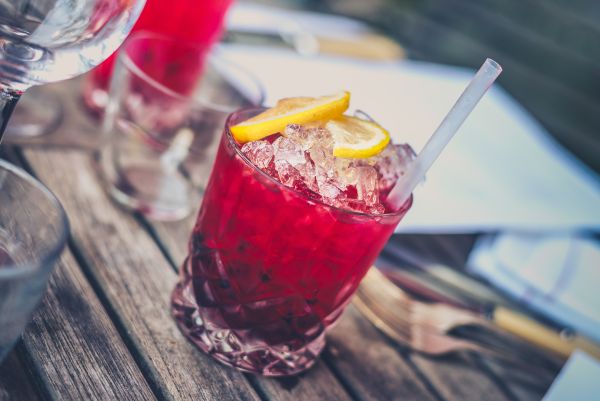
Water, raspberry syrup and a dash of fresh lemon juice: that’s all it takes to make “skiing water”, or Skiwasser as Austrians call it. For generations, this rosy pink refresher has been served in Austria’s mountain huts between runs or on summer hikes – and is popular with young and old alike. If you’re lucky, your Skiwasser will come with homemade syrup from raspberries picked fresh in the garden or the surrounding woods.
Most
Not all Most is created equal: in Lower Austria’s Mostviertel (literally the “Most Quarter”), and in Upper Austria, where the landscape is dotted with traditional meadow orchards, the word refers to fermented apple and pear juice, much like cider and perry. Locals are especially proud of their “Mostviertler Birnmost”, which enjoys EU-wide protection as a designation of origin. It’s traditionally served in a cosy “Mostheuriger” (a rustic farmhouse tavern), ideally alongside a hearty “Jause” (a traditional Austrian cold platter) of smoked bacon, cheese and fresh farmhouse bread. And just how attached the region is to its Most shows in its many cider festivals, which are firmly rooted among the customs and traditions of Austria.
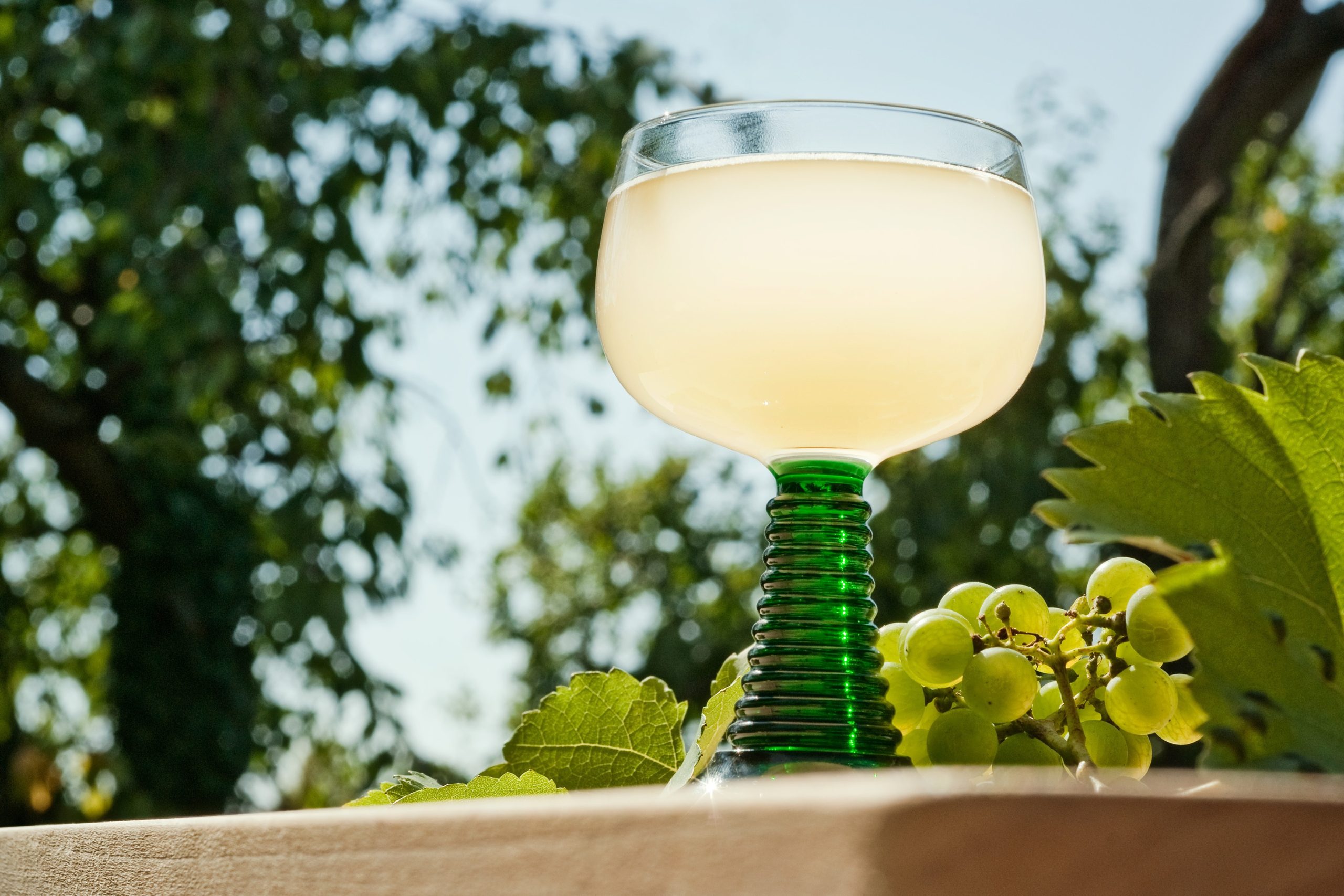
In Austria’s wine regions, Most is a different story altogether. Here, it’s freshly pressed grape juice, and you also need to be quick if you want to try it: because once it’s out of the press, it starts fermenting straightaway.
Sturm
Sturm, a young wine still in the midst of fermenting, is arguably Austria’s most iconic symbol of the seasonal change from summer to autumn. The name says it all: Sturm means “storm”, a fitting description of the lively fermentation that occurs in the cellar. There are also some very specific rules when it comes to drinking Sturm: instead of “Prost!” (cheers), you say “Mahlzeit!” (“Enjoy”), glasses need to be held in your left hand, and you never clink them. The reason? As long as it’s still fermenting, it doesn’t count as proper wine yet. All of this changes on St Martin’s Day on 11 November, when Sturm is ceremonially “christened”. From then on, all the classic drinking rituals, including clinking glasses, are permitted. Don’t leave it too late, though: by law, this cloudy, slightly sparkling drink may only be sold between 1 August and 31 December. Our tip: Try it at a Heuriger or a Buschenschank, a farm-run wine tavern, ideally with a bag of roasted chestnuts on the side!
Spritzer
Whether in a “Schanigarten” (pavement café terraces), at the Heuriger or out on your balcony to ring in the end of the workday, few things are as quintessentially Austrian as the Spritzer. Often dubbed the country’s “national cocktail”, it’s a simple mix of fruity white wine and soda or sparkling mineral water. The 50:50 ratio is, in fact, even laid down by law. Only its lighter sibling, the Sommerspritzer (“summer spritzer”), is mixed with three parts water to one part wine. Which wine goes into the glass varies from region to region, whether that’s a Gemischter Satz (a field blend), a Grüner Veltliner or a Welschriesling. But on one point, everyone agrees: the wine has to be fresh and clean, since the bubbles are sure to amplify even the tiniest flaw!
Radler
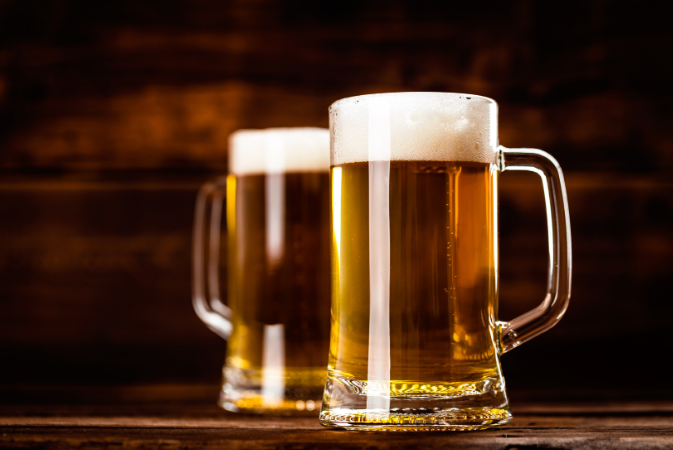
Austrians don’t just like to mix their wine: beer topped up with lemonade has long earned its place on Austrian drinks menus, too. Ironically, the Radler, a close cousin of the British shandy, was actually invented in Germany, though. Legend has it that around 1922, an innkeeper near Munich was swamped with thirsty cyclists and began running out of beer. As a quick fix, he simply stretched it with lemonade. Fittingly, “Radler” is the German for “cyclist”. To this day, the classic version is made with lemonade or orangeade, but there are plenty of popular twists: for example with Almdudler (“Almradler”), mineral water (“saurer Radler”, literally translating to “sour Radler”) or cola (“Diesel”).
Soda Zitron (“soda and lemon”)
Sparkling mineral water with a generous splash of lemon juice: it’s hard to believe that such a simple drink has never quite made it beyond Austria’s borders. Austrians, meanwhile, can order their beloved “Sozi”, short for Soda Zitron (soda lemon), practically anywhere. It’s the go-to rink whenever you’re after something fizzy and refreshing.
Kracherl
If you want childhood summer holiday nostalgia in a bottle, look no further than Kracherl – which is what Austrians call the kind of sweet fizzy pop that hisses and sparkles delightfully as you open the bottle. The bright red raspberry version, Himbeerkracherl, is the undisputed favourite, but the lemon and orange varieties have their loyal fans, too.
Jagatee
Hot black tea laced with rum and a hint of orange and lemon: Jagatee (“hunter’s tea”) is a mountain hut classic, especially when your fingers are frozen stiff after a long day out on the slopes. Its close ties to Austria are even official: the name “Jagatee” is protected throughout the EU and may only be used for products made in Austria.
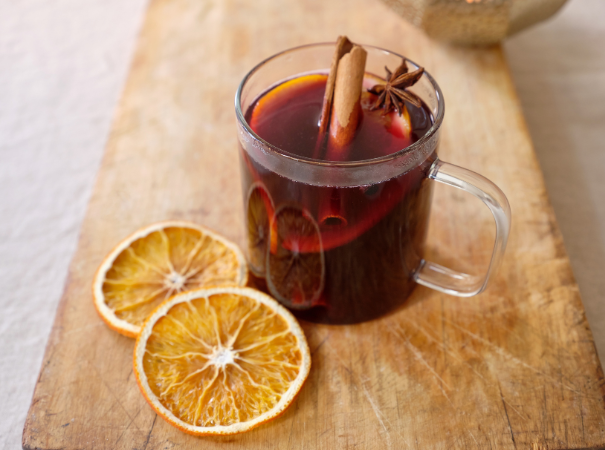
Flügerl
Flügerl are another après-ski favourite that regularly make their way across the bar: they’re a mix of vodka, lemon and an energy drink, usually Red Bull. And the name? It means “little wings”, a playful nod to the brand’s famous slogan. After all, as everyone knows all too well, Red Bull gives you wings!
Did you know? Red Bull is itself an Austrian drink. Launched in 1987, it is inspired by a beverage that company founder Dietrich Mateschitz had discovered in Thailand.
Schnaps: Obstler, Edelbrand and more
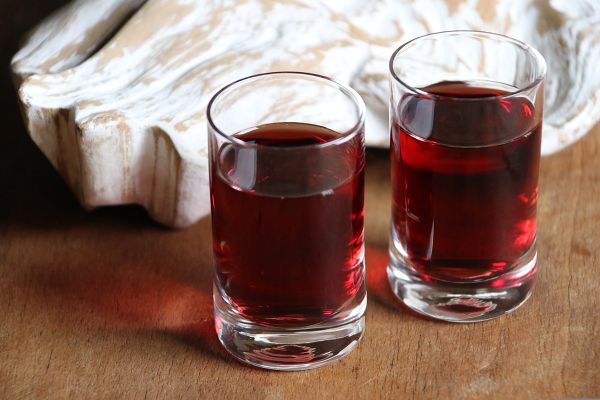
No hearty Schweinsbraten (roast pork), plate of Kasnocken (cheesy dumplings) or other Austrian culinary delight is quite complete without a closing Stamperl, a small glass of Austrian schnapps. More often than not, that means it’s time for an Obstler! This clear fruit brandy is usually distilled from apples and pears and, as popular wisdom has it, “gets the digestion going”. If you prefer a single variety, reach for an Edelbrand, which is distilled from just one type of fruit. Almost every region has its own favourite, too: apricots are typical for the Wachau, rowan berries for Tyrol and Salzburg, the Hirschbirne pear for Styria and, in western Carinthia, you’ll find the Bananenapfel, an old local apple variety.
Zirbenschnaps
Another specialty hailing from the Austrian Alps is Zirbenschnaps. Instead of fruit, it’s made with young cones of the Swiss stone pine, which are steeped in alcohol for several weeks after harvesting. They give this type of schnapps its characteristic reddish hue and its spicy, slightly resinous appearance. Simply put: A Stamperl that tastes a little like a walk in the Austrian woods!
Whether you order a Skiwasser, a Spritzer or an Obstler, they’ll all give you a good taste of Austria. And if you’d like to dive even deeper into the Austrian way of life, head over to our blog: there, you’ll discover why Viennese Schmäh, the capital’s famously dry wit, shouldn’t always be taken literally, what Krampus and Perchten are all about and which wedding traditions in Austria you might encounter on the big day. With that in mind: Prost and happy reading!