
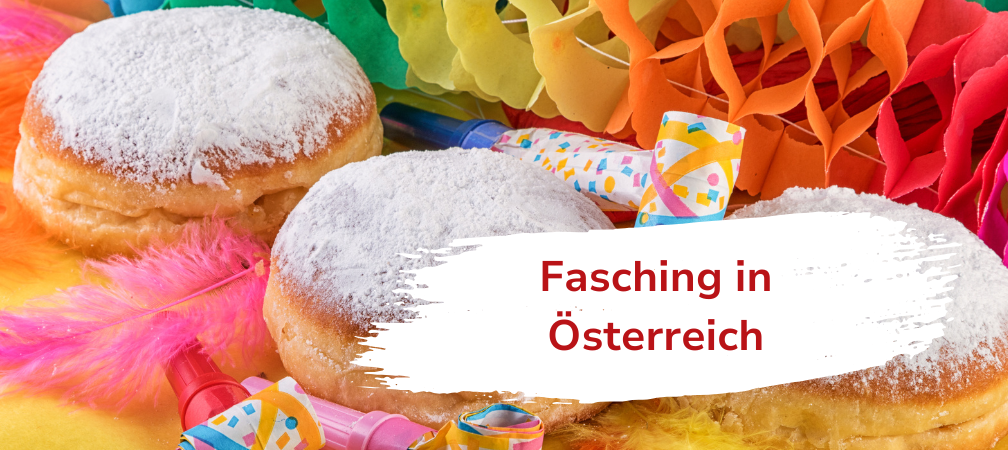
Confetti, costumes, confectioneries: Every February, Austria lets loose with Fasching – the country’s take on carnival – and it’s quite the spectacle. Often referred to as the “fifth season“, it’s a colourful escape from the winter blues, where people of all ages put on masks and costumes to celebrate life to its fullest. But where does this age-old tradition actually come from, and why are Austrians so passionate about it? We’ll take a closer look.
When does Fasching begin and end?
If you want to join in the fun, make sure to check your calendar carefully. Because the Fifth Season has its very own rhythm, shifting from year to year. 11:11 am on 11 November marks the beginning of the carnival season, but the celebrations don’t actually kick into full gear until after the Christmas holidays on 7 January, the day after Epiphany. The grand finale is marked by Shrove Tuesday – colourful parades take over the streets, and the whole country comes together to dance, laugh and celebrate.
The actual conclusion of the festivities is determined by the moon. More specifically, Easter Sunday, which can fall anywhere between 22 March and 25 April. Ash Wednesday, which always falls on the 46th day before Easter, marks the last day of Fasching and ushers in Lent. So depending on the year, the party might be over before you know it, or stretch on for weeks. By the way: It’s anything but a coincidence that Fasching and Lent go hand in hand – and the origins of this much loved tradition are older than you might think.
Where does Fasching come from?
In central Europe in particular, Fasching is rooted in age old- traditions and ancient Pagan rituals. Long before the advent of Christianity, people in the Alps and along the Danube would parade through their villages with fear-inspiring masks, carrying blazing fires and making deafening noise to banish evil winter spirits and usher in spring. Over time, these ancient processions gave rise to many more beloved traditions apart from Fasching – like the notorious Krampus and Perchten runs, which are a firm feature of the celebrations in the lead-up to Christmas.
In the Middle Ages, these ancient rituals merged with the Christian calendar. The weeks leading up to the 40-day period of Lent eventually became the last chance to eat, drink and celebrate to one’s heart’s content – a final hurrah before the time of sacrifice.

Carnival in Ancient times
However, traces of such festivities date back even further. Ancient civilisations, like the Mesopotamians, already held festivals where normal rules were temporarily suspended, and social hierarchies set aside. The Romans practiced similar traditions: masters served their slaves, authorities were openly mocked, and for a few days, nobody took life too seriously.
From East to West: Carnival traditions in Austria
Our modern Fasching tradition is a blend of all these customs, woven together over thousands of years. The real stars of the celebrations: The end of winter, one last round of indulgence before Lent, and the joy of turning the world upside down for a little while – a cheerful break from ordinary life. But every region in Austria puts its own spin on the festivities. Here’s a look at the most popular customs and celebrations:
Fiss, Tyrol: ‘Blochziehen’
Some of the oldest Fasching customs that have evolved from ancient Pagan rituals to drive out winter are still very much alive in Burgenland and Austria’s alpine regions. To this day, these traditions feature intricately carved wooden masks, elaborate costumes and deafening noise. An especially spectacular example is the so called “Blochziehen” (literally: ‘’block-pulling’) in Fiss, Tyrol. Picture this: Every four years, a massive Swiss pine trunk – up to 35 metres long – is hauled through the village on wooden sleds by a group of strong men, accompanied by a colourful parade of traditional figures. Since 2011, this custom has also been part of the UNESCO Intangible Cultural Heritage.
Ebensee, Upper Austria: ‘Fetzenzug’
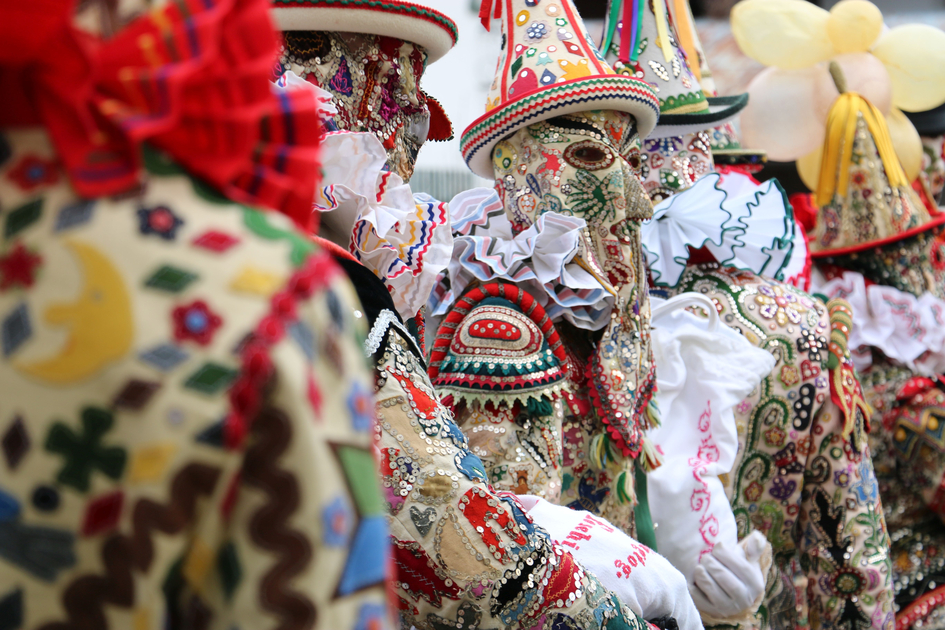
Another showstopper is the “Fetzenzug” (‘rag parade‘) in Ebensee, Upper Austria. On Rose Monday, the ‘Fetzen’ (rags) march through the town wearing old dresses covered in vibrant fabric scraps, their faces hidden behind hand-carved wooden masks. Over 120 years old, this tradition is also officially protected as Austrian cultural heritage.
Fasching in Aussee, Styria
Over in Styria, Fasching in Aussee throws the region into three days of cheerful chaos. The typical Fasching characters of this Austrian region – the so-called “Flinserl” in their glittery costumes, the loud drummer ladies, and the winter-banishing Pless – parade through the streets, making for an unforgettable scene. Another Styrian highlight, the Murauer Carnival Run (German: Murauer Faschingsrennen) is also on the UNESCO list – a masked procession making its way from farm to farm.
‘Faschingssitzung’ and parades
No Austrian Carnival season is complete without Villacher Fasching. This Carinthian tradition of ‘Faschingssitzungen’ – think witty speeches, musical performances and comedy sketches – has been broadcast on national television for decades and has achieved cult status. It’s all about poking fun at authorities and dishing out criticism with a wink – just like the ancient Romans used to do.
And elsewhere in Austria? Across the whole country, Shrove Tuesday brings colourful parades to the streets – from Graz to the Rauris Valley in Salzburg and Güssing in Burgenland.
Gschnas in Lower Austria
Lower Austria takes a more relaxed approach to Fasching – but that doesn’t mean the fools have to miss out. Towns like Tulln and Mödling host colourful parades that are especially popular with families. But the true centerpiece of Fasching is the so-called ‘Gschnas‘: this refers to traditional masked balls organised by local sports, music and dance clubs. They’re a win-win – great fun for everyone and a handy way to fill the club coffers. No wonder almost every municipality has its own.
Another hot tip: the Gardetanzgruppen, dance troupes found across the region who train all year round for their acrobatic Fasching performances.
Vienna: Fasching on the dancefloor
Looking for parades in Vienna? You won’t find any. The capital prefers to waltz its way through winter, and the legendary Viennese ball season has become the city’s elegant answer to the folk traditions found elsewhere.
Krapfen & Co: Indulging before Lent
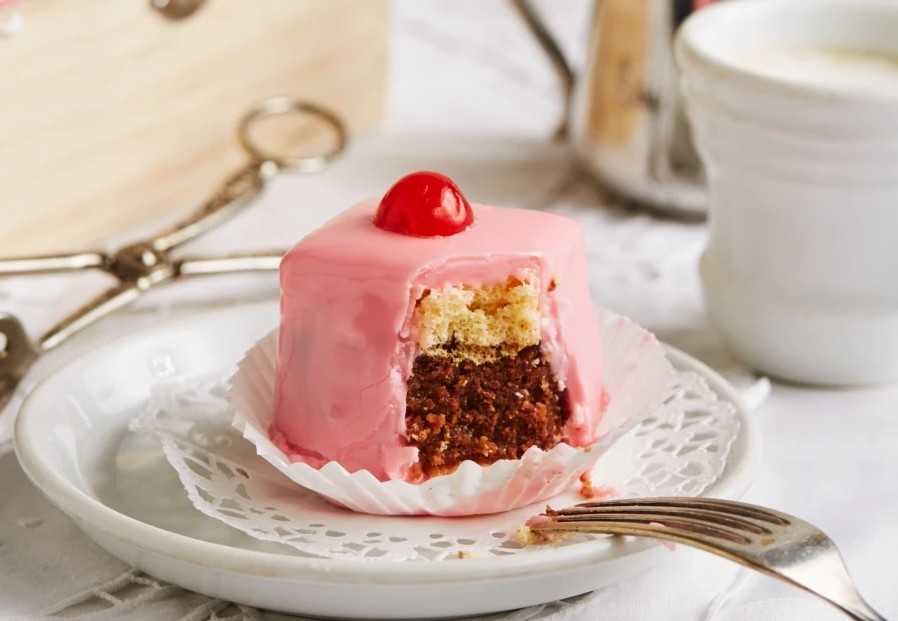
But Fasching isn’t just celebrated in the streets and ballrooms – it’s also celebrated at the table. After all, feasting before the barren days of Lent was already a must in the Middle Ages, and this tradition lives on in Austrian cuisine to this day. The undisputed star of the season is the Faschingskrapfen: golden brown on the outside, fluffy on the inside, filled with apricot jam and generously dusted with icing sugar. Whether for breakfast, an afternoon snack or to round off a Fasching party – Fasching without Krapfen is simply unthinkable in Austria. And let’s not forget about the irresistibly sweet Punschkrapfen, instantly recognisable by its bright pink glaze.
Tip: If you want to learn more about Austria, its people and the culture that defines them, take a look at our blog. Whether you’re curious about famous Austrian composers or writers, or looking for the country’s best music festivals – we’ve got you covered. Plus, explore the variety of Austrian dialects, traditional clothing or the many types of Viennese coffee. Happy reading!