Glistening snow, a delightful whiff of fresh mountain air and a speedy downhill ride culminating in a stopover at a mountain hut for traditional Austrian food is usually what immediately pops into people’s heads when they picture a typical skiing holiday in Austria. And yes, there is definitely a reason why the cliché of the skiing Austrian is going nowhere! Find out more about the rich history of the nation’s national sport, how it evolved from a basic means of transportation to a cultural phenomenon and why you still can’t go wrong with a holiday in the alps.
The evolution of alpine skiing: From practical transportation to high-speed holidays
While skiing in the alps is commonly associated with glitzy resorts, high-end equipment and daring downhill events, the original purpose of skis is far more humble: As a basic mode of transportation, they were used when hunting in the snow or to quickly get from one mountain village to the next. The first pairs were made from wood, usually longer than two metres with an upward bending tip. To secure them, they were fitted with a simple leather strap to hold the feet in place, while leaving the heel free to move. As they were fairly unwieldy given their sheer length, people commonly used a long stick for steering and breaking.
In the 19th century, the so-called “Telemark”-technique was invented, which made moving easier by pushing one ski forward while bending the knee on the back leg. In Austria, Max Kleinoscheg from Graz and innkeeper Toni Schruf from Mürzzuschlag were instrumental in advancing the new sport in Styria, with the first international skiing competition taking place in Mürzzuschlag in 1893. However, the length of the skis were not exactly suited for the steep alpine slopes. Skiing pioneer Mathias Zdarsky from Lower Austria subsequently decided to shorten the skis, improved the binding and also developed a new technique, the so-called “stem turn”, where one ski stems outward to initiate a directional change and reduce speed at the same time. This made it possible to successfully navigate steeper slopes.
In 1901, the Arlberg Ski-Club was founded, Hannes Schneider’s famous skiing school in St. Anton (Tyrol) followed suit in 1921. With the further introduction of skiing lessons, ski lifts and continuously improving equipment, skiing moved from a simple means of transportation to a pastime activity for the masses.
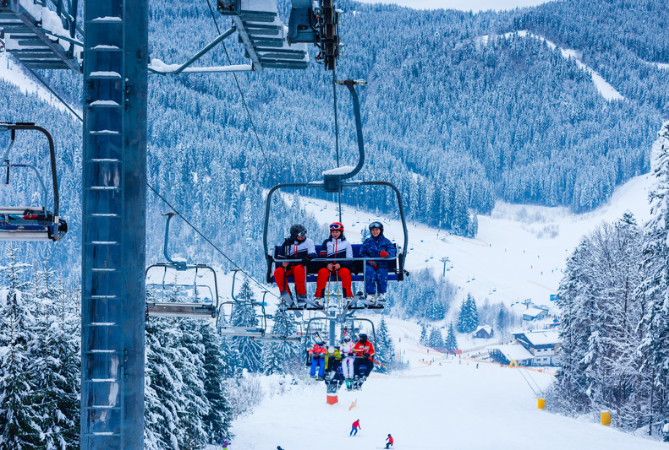
Skiing in the 1960s & 1970s: Après ski, ski week and ski holidays
In the 1960s and 1970s, skiing saw a huge surge in popularity. New lifts were installed, more and more skiing schools opened, and the growing economic prosperity made the sport accessible to more and more people. These circumstances soon gave rise to the glamourous side of skiing, better known as après ski: Places like St. Anton, Kitzbühel, Lech and Zürs turned into high-society hotspots, with the rich and famous mixing and mingling on sunny hotel terraces with cocktails and champagne, donning their most exquisite fur coats and stylish sunglasses. Seeing and being seen were pretty much as important as completing the perfect run – a concept that has very much stood the test of time.
Kitzbühel and Lech-Zürs are still synonymous with the classic luxe winter holiday, while those seeking entertainment tend to favour hotspots like Ischgl and St. Anton, where world-renowned DJs and big concerts are part and parcel of the experience. And those who enjoy a quiet holiday can simply explore the local scenery and enjoy the cosy atmosphere of a traditional Austrian mountain hut.
Another hugely important part of Austrian skiing (and school) culture is the traditional ski trip, a week-long stay in the mountains spent mostly on the slopes. Many teens ventured out on skis for the very first time during ski week, shared rooms with their classmates and – in many cases – got to experience their very first “holiday” without their parents. In the 1978/80 school year, a whopping 252,000 pupils took part in these activities. Today, ski weeks are still organised across Austria’s schools, although attendance numbers have significantly dwindled over the years, mainly as a result of changing interests as well as the high costs involved.
Skiing legends & unforgettable moments: Sporting successes that swept the nation
Alpine skiing has always been a huge part of Austrian culture, but has equally contributed to some of the country’s greatest sporting achievements. Toni Sailer won three gold medals at the 1956 Olympic Winter Games, while Annemarie Moser-Pröll secured six alpine world cup titles throughout her career. And naturally, a whole nation held its collective breath when Franz Klammer stormed to glory on 5 February 1976 at the Olympic Games in Innsbruck after a daring downhill run. Later, icons like Hermann Maier (lovingly nicknamed “Herminator”), Stephan Eberharter and Marcel Hirscher added to the list of successes, while the likes of Alexandra Meissnitzer, Michaela Dorfmeister and Marlies Raich (formerly Schild) dominated the women’s division for many years.
Top Austrian alpine skiers
- Toni Sailer (years active: 1954-1958)
- Karl Schranz (years active: 1960-1972)
- Annemarie Moser-Pröll (years active: 1968–1980)
- Franz Klammer (years active: 1973–1985)
- Alexandra Meissnitzer (years active: 1991–2008)
- Michaela Dorfmeister (years active: 1991–2006)
- Renate Götschl (years active: 1993–2009)
- Hermann Maier (years active: 1996–2009)
- Marlies Raich (ehem. Schild) (years active: 2001-2014)
- Marcel Hirscher (years active: 2007-2019)
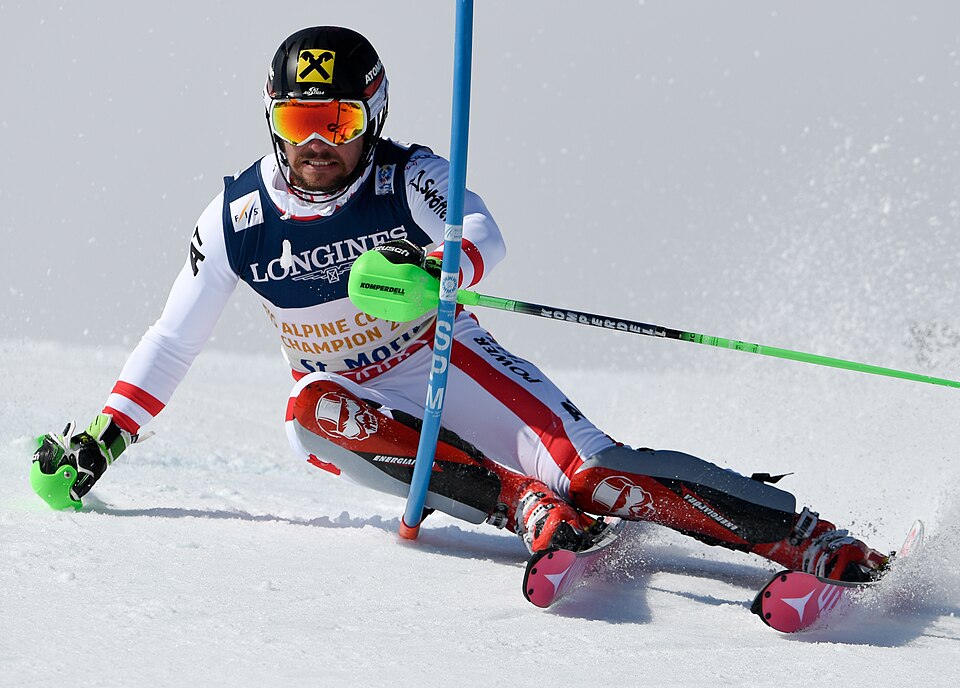
To this day, iconic events such as the legendary Hahnenkamm Race in Kitzbühel and the Night Race in Schladming draw thousands of fans. Of course, these events are not just sporting highlights but major social occasions as well. That being said, the local enthusiasm is not just limited to alpine skiing: Austrians cheer just as passionately for ski jumping, cross-country skiing, biathlon, snowboarding and freestyle.
From the Arlberg to Zell am See: Austria’s best ski areas
Whether skiing or snowboarding, Austria is the perfect destination for your favourite winter sport.
In the far West, Lech and Zürs on the Arlberg and Montafon are among the most popular ski destinations, while Alpenregion Bludenz boasts the two stunning resorts Sonnenkopf Mountain and Brandner Valley. In Tyrol, St. Anton, Ischgl and Kitzbühel are the go-to choices for sports enthusiasts, while visitors to Salzburg can explore popular areas like Saalbach-Hinterglemm, Obertauern or Zell am See-Kaprun.
In Styria, Schladming, Stuhleck and Tauplitz are well worth a visit; in Carinthia, Nassfeld, Heiligenblut, Turracher Höhe and Bad Kleinkirchheim count among the top destinations.
Further north, Upper Austria offers up a number of great options like Hinterstoder and Hochficht. And if you’re bound for Lower Austria, you’ll feel right at home on the slopes on Hochkar and Semmering. Enjoy a good winter hike? Schneeberg and Rax are the place to be.
How long is the ski season in Austria?
In Austria, the ski season usually starts in late November or early December and runs until March or April. However, In high-altitude resorts, you can often enjoy the pistes from autumn well into spring.
Tip: If you’re planning to travel over Christmas or during the Austrian half-term holidays in February, make sure to book your accommodation and ski lessons early. Snow conditions can vary considerably, so it’s also a good idea to check the latest snow reports and which slopes are open before you set off.
Challenges: Between climate change and economic survival
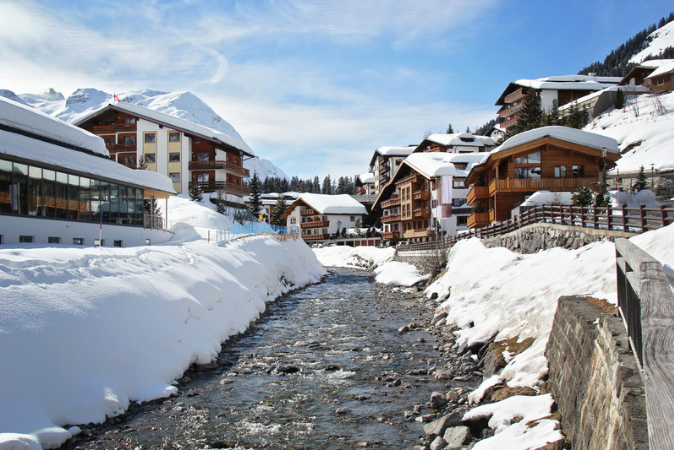
For many Austrian mountain communities, winter tourism is a key part of the economy: entire villages and regions depend on it. But climate change is putting them under increasing pressure. At low and medium altitudes, rain falls more often instead of snow, winters are getting milder and in many places the natural snow cover is melting faster. To keep the season running reliably, many ski resorts turn to artificial snowmaking. However, snowmaking systems need large amounts of water and energy, which can pose a particular challenge during dry spells. Plus, the warmer winters become, the harder and more expensive it is to produce snow.
As a result, many regions have already started looking for alternative options to secure their economic future beyond the slopes, for example by placing more emphasis on cultural events and regional cuisine as well as spa and wellness packages. Summer tourism, including hiking, mountain biking and more, is also becoming increasingly important. Given climate change, the debate over whether Austria should keep investing in ski tourism is anything but simple. However, there is no question the priority should be on finding solutions to secure people’s livelihoods in the long term.
Want to explore more Austrian culture, history and fun facts? On our blog, you’ll find plenty of reading material to keep you entertained, including a lowdown on typical Austrian drinks and which customs and traditions are still celebrated year after year – from christmas markets and Perchten runs to Fasching and Easter.